Where you stand
As a product launched two weeks ago, the ethical dilemma is this: putting up a consent window might scare people off. But it's also the right thing to do. If you want to change the world, you need a place to stand and a lever. The place you stand has to be your non-negotiables.
We launched Quanten Arc ten days ago. The team is excited about starting to see some users, and we started talking about adding analytics.
Here's something I learned: for something as simple as putting Google Analytics on your page, you need to ask consent from your users. It's a GDPR matter, but GDPR has also become the standard for privacy across the world. The fact that you're tracking your users is something you should ask consent for.
Almost every startup, once they launch, wants to get a sense of whether people are visiting and using their product. But it's taken for granted that users won't object to being tracked—and rarely do people ask them for consent.
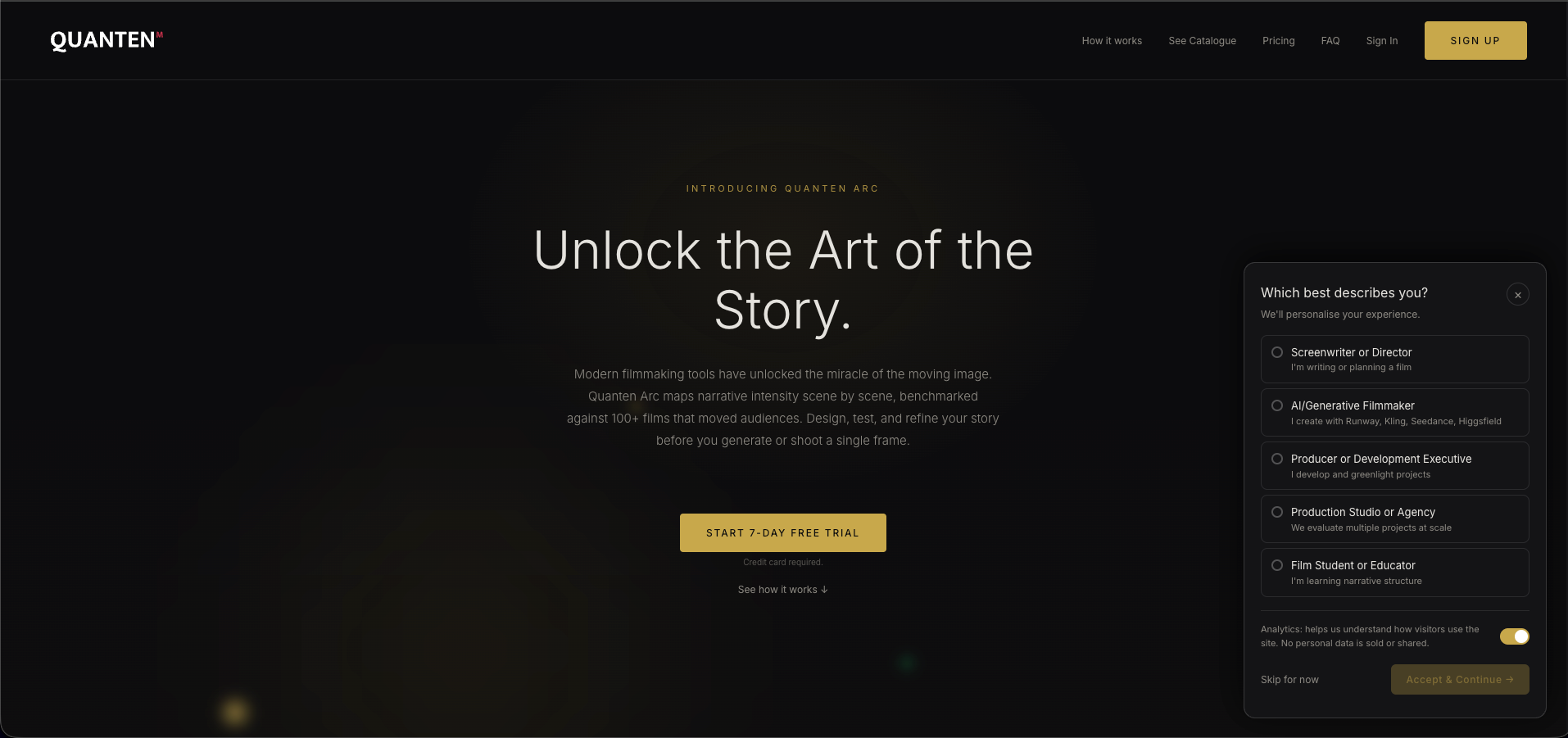
I figured there were different segments of people landing on our page, and I wanted to ask them what their intention was so I could change the text of the site to reflect their needs. That's what you'd do if you met someone in person and they told you who they were—you'd talk about how to solve their problem rather than list everything the product can do. But that meant storing a cookie and remembering them so we could point them in the right direction.
And that meant asking for consent. As a product launched two weeks ago, the ethical dilemma is this: putting up a consent window might scare people off. It makes it feel like there's a big company behind this. But it's also the right thing to do. If a user hits skip or closes the window, we don't collect any data. If they pick a segment and opt in to share their analytics, then they show up on our dashboard.
This is how I'd want to be treated. In a world where everything feels chaotic, this is my way of building a place where I can make things and treat people the way I'd want to be treated. I understand the pain of the 0-to-1 journey and getting signups at any cost, but ethics don't show up later. They're either there on day zero or they aren't. The challenges of growth are only going to get harder as you climb uphill, and if you don't draw the line early, the standard for that line keeps moving.
If you want to change the world, you need a place to stand and a lever. The place you stand has to be your non-negotiables, and the lever is the product and value you offer. Standing on sand and being "flexible" with values makes it harder to move the world.
But that's just me. My parents tell me I choose to take the difficult path more often than not.
What do you think?