Lessons from a Koi Farm
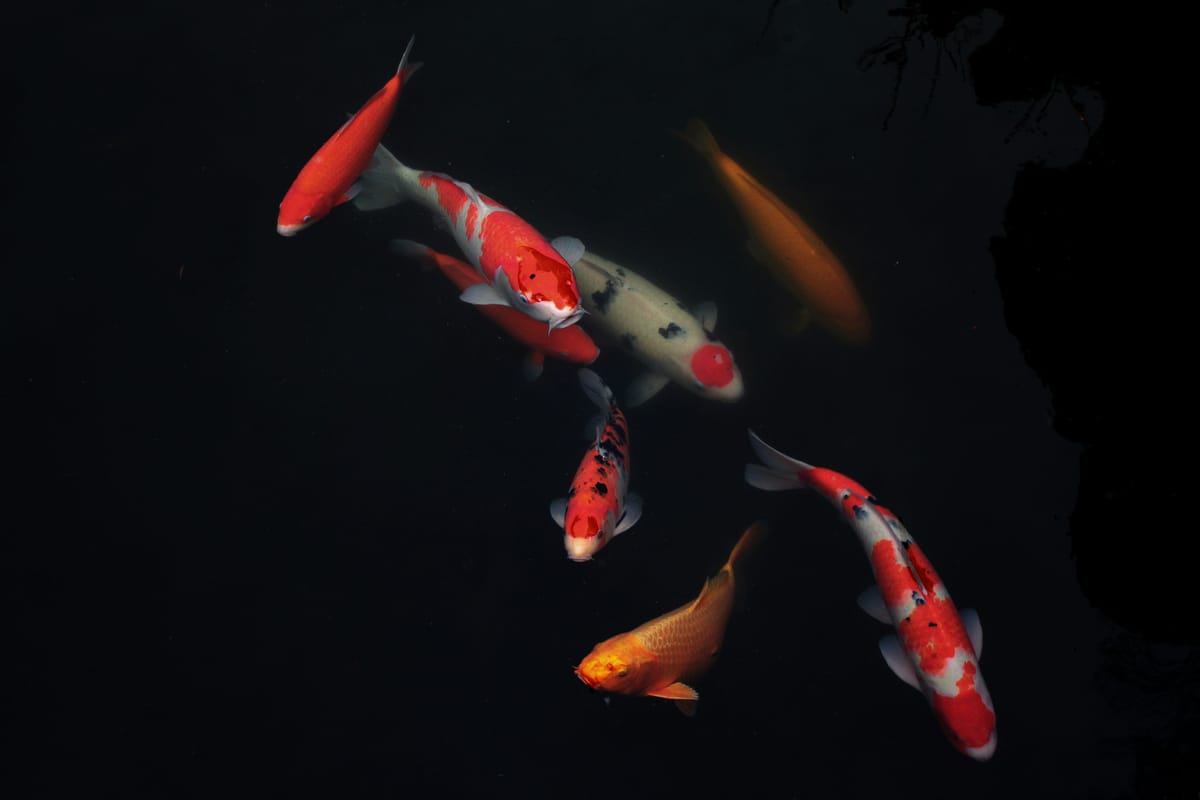
Whenever the world feels chaotic, I look for patterns in analogs and parallels that might give a sense of direction.
There's so much talk about abundance and disruption in the content world these days that sometimes it's hard to make sense of it all.
I recently visited a friend who runs a Japanese Koi farm. I've kept an aquarium since childhood and have had koi fish, but I never knew they could be so expensive.
He casually pointed at some fish in a tank and said they can go for as much as $10,000.
I don't remember ever paying more than $5 for koi fish at the local aquarium shop.
It comes down to curation.
Every time a Koi pair spawns, they lay eggs and hatch 200,000 to 500,000 fry (baby fish).
The first act of curation is ensuring the breeding pairs have aesthetically pleasing patterns. The premium koi world is all about patterns in the right way.
Once the fry are born, they're separated based on colors, which indicates what their general pattern will be. Black koi fry might become Showa, Utsuri, Bekko, or occasionally Shiro Utsuri. White koi fry often turn into Kohaku, Sanke, Yamabuki Ogon, or Platinum Ogon. It comes down to whether the pattern is a white fish with colored markings or a black fish with colored markings.
Over the next 6-12 months, every 45 days they're sifted. One koi at a time. The curator's job is to visualize what the fry will grow up to be, how the colors will evolve, and whether the symmetry will shape up.
After the initial mortality and first cull, it's brought down to 50,000 baby fish. From there, it's culled again: at week one, the first month, 2-3 months later, after the first winter. By then it's been reduced to 3,000 fish. All along the way, whatever doesn't make the cut gets sent to aquarium shops. That explains why we get them so cheap.
From an initial spawn of 200,000, a good farm will pick 300, determine 30 to be exceptional, and keep 1-5 as elite prospects.
And it's in that curation that the simple fish, normally not worth much, gains so much value.
When the cost of generation isn't much, as is the case today where AI is making content creation a commodity, it's the curation that creates value.