Introducing Continuous Narrative Comparison : Seeing the whole story.
Sometimes, the story does not stop at the end of the film. Neither should the analysis. Quanten Arc now supports continuous arc comparison across franchise films, sequels and episodic series - seeing the whole story as one unbroken narrative.
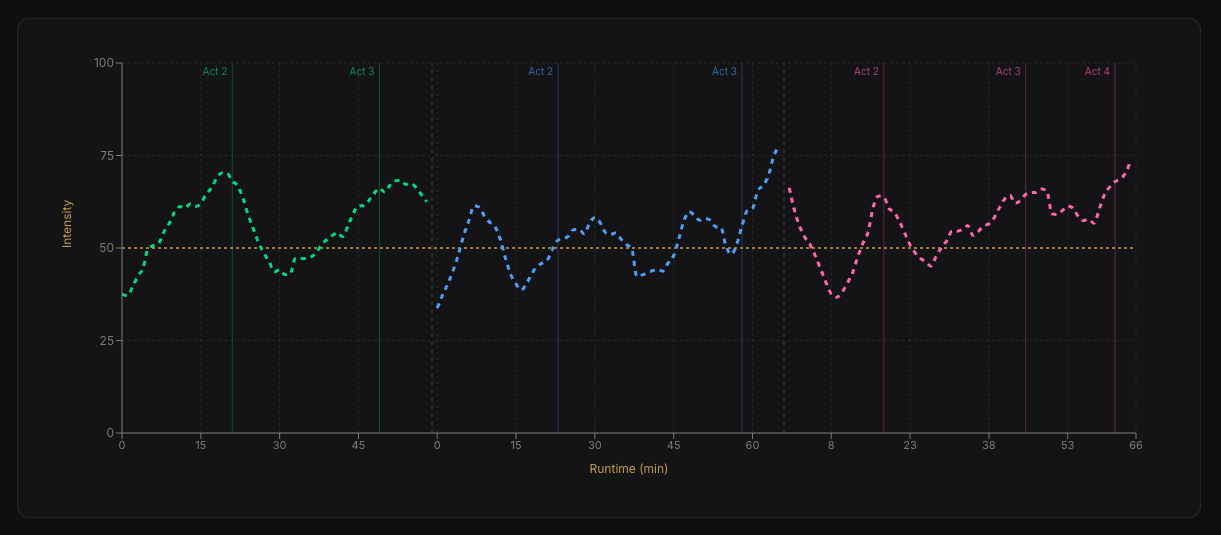
There is a question that comes up repeatedly in film and television development that nobody has had a clean way to answer. How does a story evolve across multiple films? How does the structural DNA of a franchise shift between instalments? And for episodic storytelling, what does the arc actually look like when you stop treating each episode as a standalone unit and see the whole thing at once?
Quanten Arc has always let you overlay the narrative arcs of different films. Put Jurassic Park, The Lost World and Jurassic Park III on the same chart and something immediately becomes visible. The first two films are structurally closer to each other than most people would guess. Similar pacing rhythms, similar act distribution, similar intensity curves across the runtime. The third film breaks the pattern noticeably. That is not a value judgment. It is structural information. And seeing it laid out visually is a fundamentally different experience from reading coverage notes about how the sequels changed in tone.
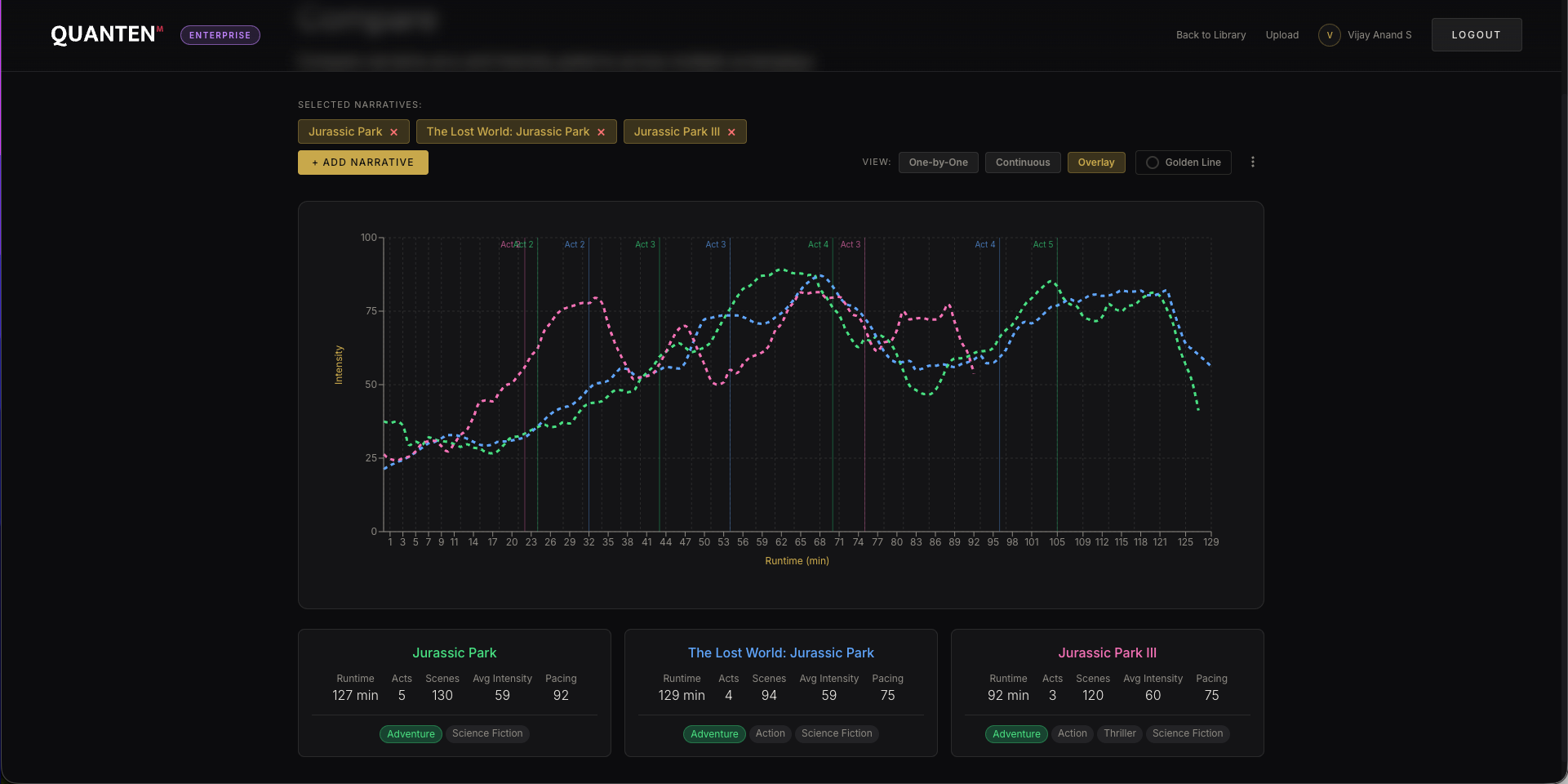
That overlay view has been useful. But it has a limitation. When you overlay two films, you are comparing them as parallel structures. You are not reading them as a continuous story.
That changes now.
Continuous arc comparison lets you see multiple films or episodes laid out sequentially, one after another, as a single unbroken narrative. The arc does not reset between titles. It continues. You see the full shape of the story the way an audience actually experiences it, across time.
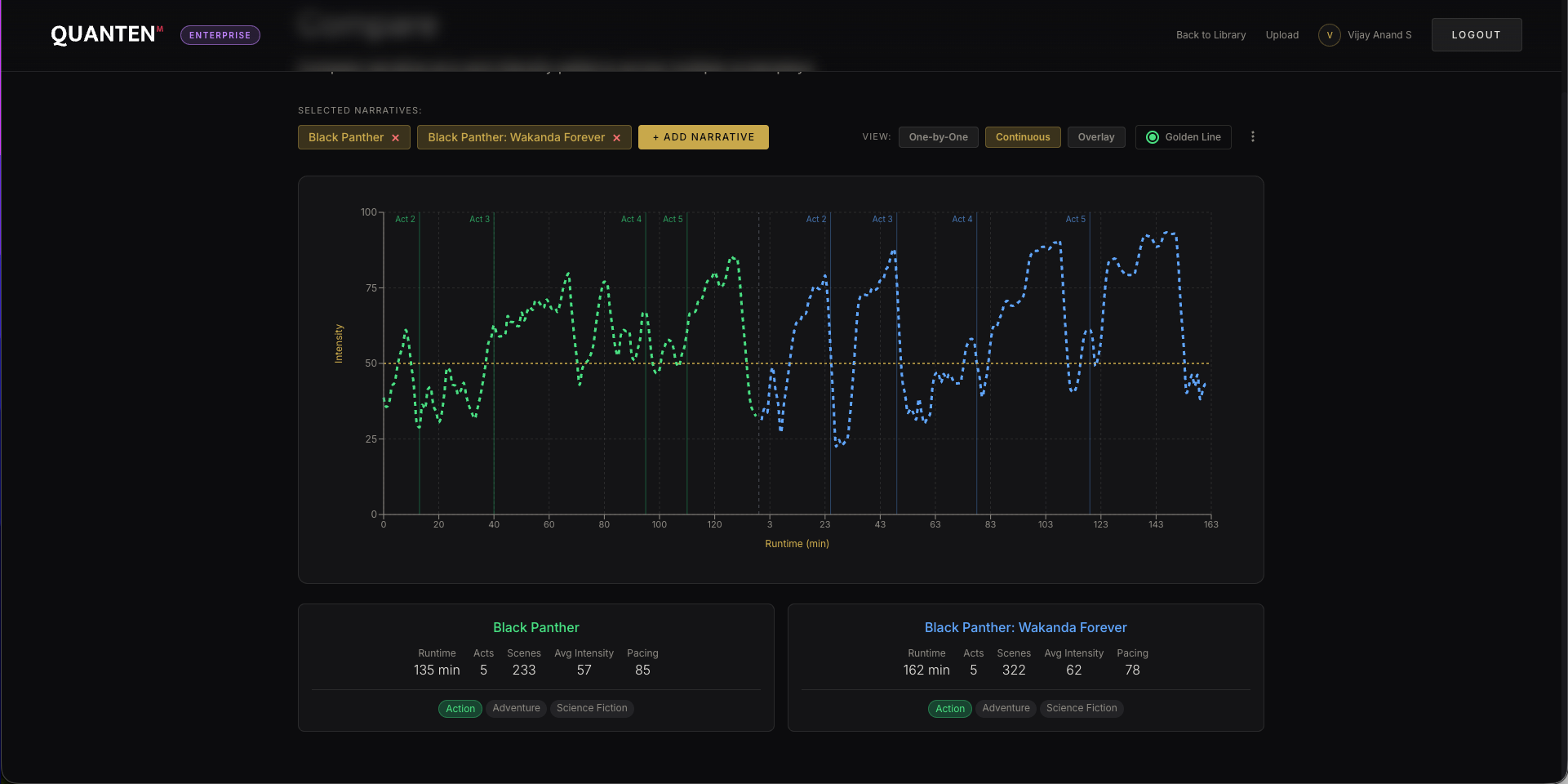
The Black Panther films show what this unlocks for franchise analysis. Black Panther runs 135 minutes across 5 acts and 233 scenes. Wakanda Forever runs 162 minutes across 5 acts and 322 scenes. Placed end to end in continuous view, you see how the emotional architecture of the story evolves from one film to the next. Where the second film picks up structurally. Where it departs. How the intensity landscape of the full story actually holds together as a two-part narrative rather than two separate films.
For a television series like Chernobyl, the continuous view is even more revealing. The first episode runs 58 minutes with 45 scenes. The second runs 65 minutes with 54 scenes. The third runs 65 minutes with 49 scenes. In continuous view, you stop seeing three episodes and start seeing one story with a structural shape that spans nearly three hours. You can see where the series concentrates its emotional weight, where it breathes, and how the arc develops across the full run rather than episode by episode.
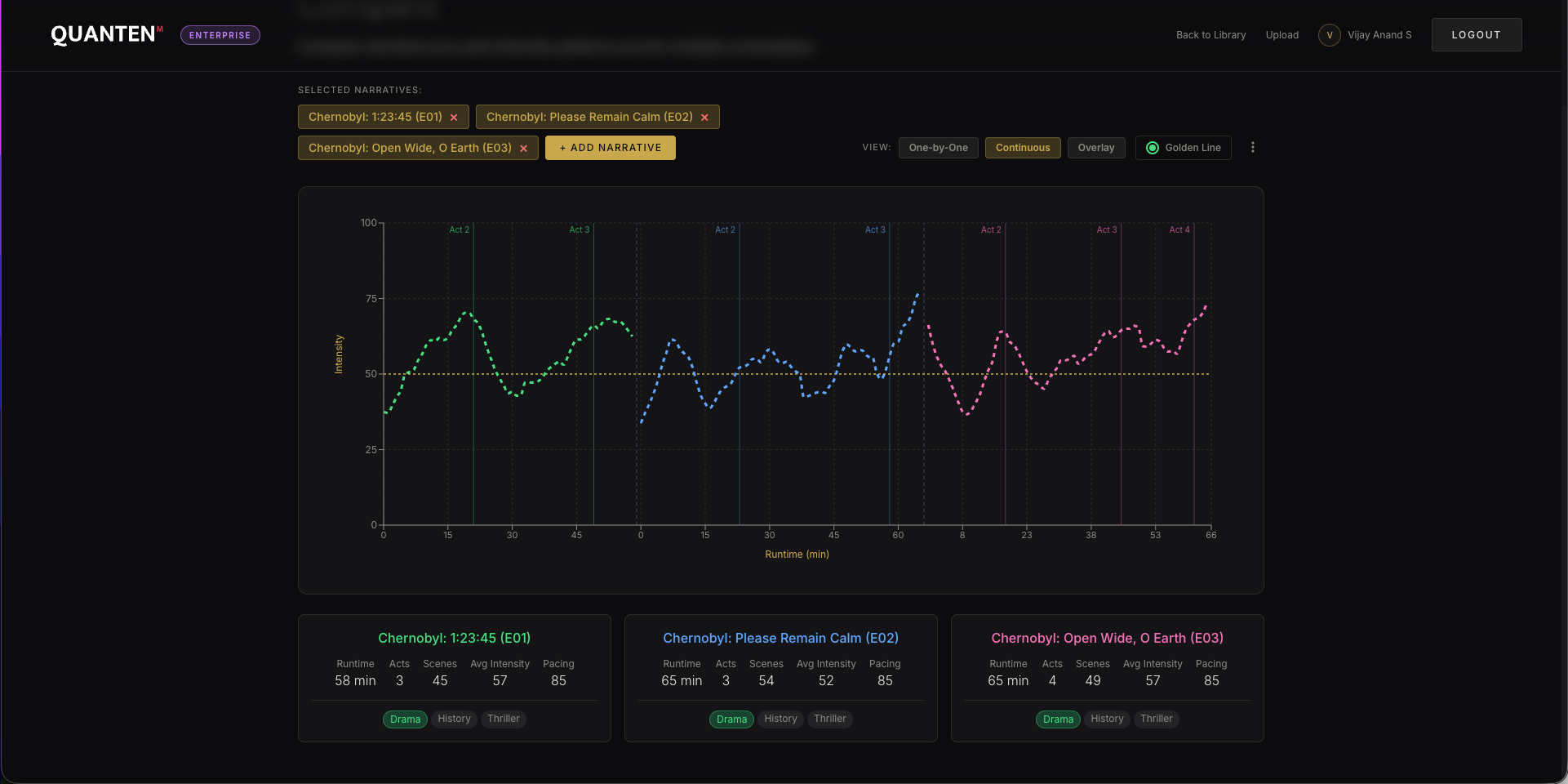
This matters for anyone evaluating episodic material. A pilot read in isolation tells you something. The same pilot read as the opening movement of a five-episode arc tells you something different. The structural logic of great series television is cumulative. Continuous arc comparison is the first way to see that structure as a whole.
What this means in practice
For development executives evaluating franchise extensions, the continuous view gives you a structural baseline. Before a sequel goes into production, you can see what the structural DNA of the original actually looks like and whether the proposed follow-up is working in the same register or departing from it.
For showrunners and writers room teams, the continuous view across multiple episodes gives you the big picture that scene-by-scene work tends to obscure. You can see whether the arc of the series is building the way it should, or whether the energy is concentrating in the wrong place.
For filmmakers preparing a series for festivals or distribution, the continuous view gives you something you have never had before: a structural read on the whole story, not just the episode you are submitting.
The story does not stop at the end of the film. Neither should the analysis.
arc.quanten.co