Deconstructing Project Hail Mary: Were the Comps Right?

When Ryan Gosling was attached to Project Hail Mary, the development conversation around the film kept returning to the same reference points. Interstellar. The Martian. Arrival. Gravity. These were the comps being used to describe what the film was and who it was for.
We have the structural data for three of those four films. We mapped Project Hail Mary, The Martian, Arrival and Interstellar through Quanten Arc and compared them side by side.
The results are instructive. One comp was right all along but probably for the wrong reasons. One was confidently wrong. One was pointing at theme rather than structure. And the film that Project Hail Mary most closely resembles structurally was there in the conversation the whole time, just cited for the wrong reasons.
The numbers side by side
Before the analysis, here is what the data shows across all four films:
| Project Hail Mary | The Martian | Arrival | Interstellar | |
|---|---|---|---|---|
| Runtime | 150 min | 141 min | 116 min | 169 min |
| Scenes | 171 | 301 | 119 | 247 |
| Scenes per minute | 1.1 | 2.1 | 1.0 | 1.5 |
| Avg scene duration | 36.6 sec | 16.0 sec | 39.8 sec | 26.2 sec |
| High intensity | 21.6% | 29.6% | 48.7% | 15.0% |
| Medium intensity | 55.6% | 42.5% | 40.3% | 55.9% |
| Low intensity | 22.8% | 27.9% | 10.9% | 29.1% |
| Momentum | +8.7 | +9.7 | +15.9 | +9.0 |
Four films in the same genre, from the same era, used interchangeably as reference points in the same development conversation. Structurally they are almost entirely different from each other.
The Martian: confidently wrong
This is the comp that made the most intuitive sense and is the least structurally accurate.
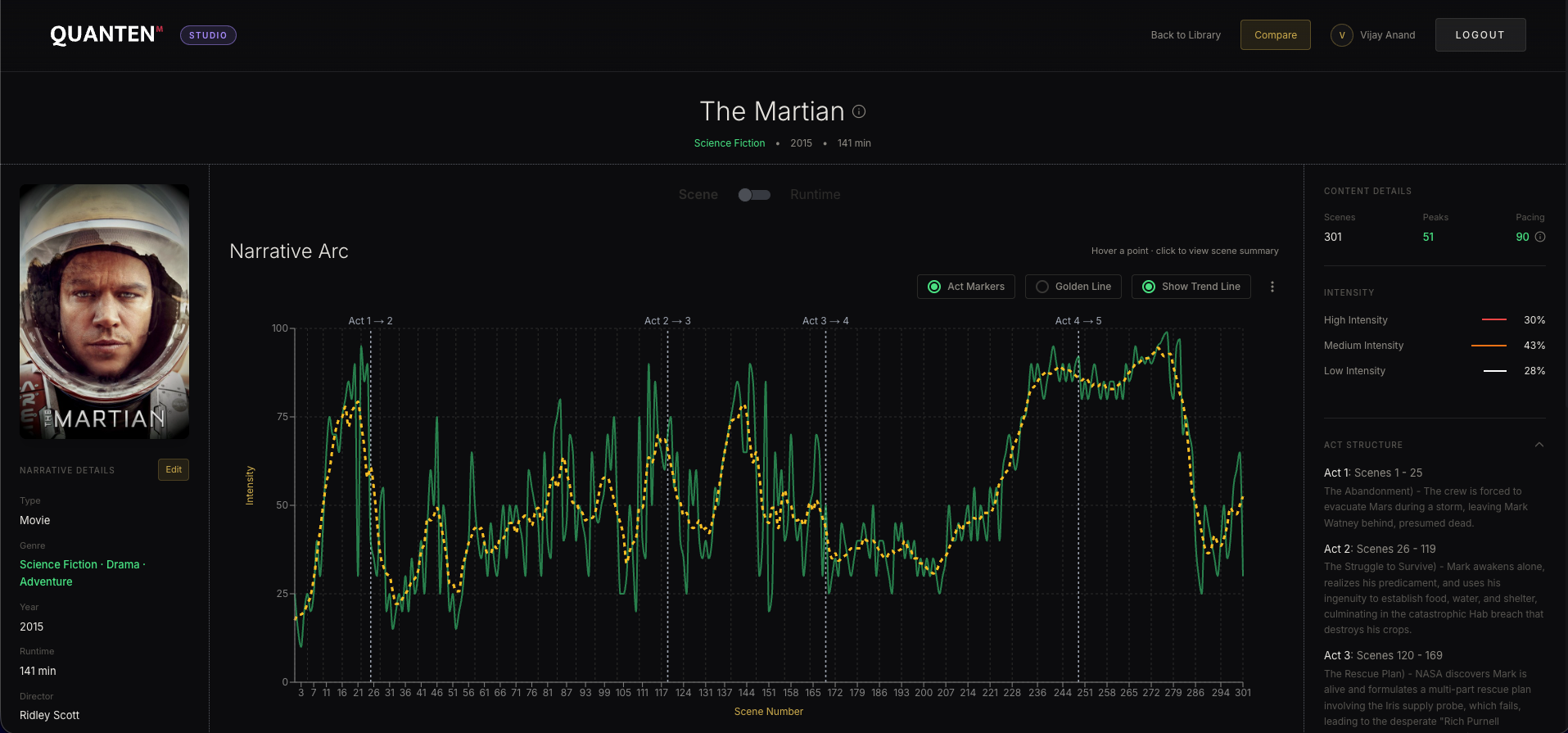
The Martian runs at 2.1 scenes per minute. Project Hail Mary runs at 1.1. The Martian averages 16 seconds per scene. Project Hail Mary averages 36.6 seconds. The Martian has 29.6% high intensity scenes. Project Hail Mary has 21.6%.
Every major structural metric points in a different direction. The Martian is a momentum machine, rapid cuts, constant pressure, a crowd pleasing climax that concentrates 25 peaks and an average intensity of 72.4 into its final act. Project Hail Mary is measured, patient, and ends quietly.
They share an author, a screenwriter, and a genre. Structurally they are built on opposing philosophies.
Using The Martian as a comp for Project Hail Mary tells a studio what the film looks like on a poster. It tells them almost nothing about how the film will actually feel in a theatre.
Arrival: pointing at theme, not structure
Arrival was the comp that pointed at the right idea for the wrong reason. Alien communication, non-linear structure, a science-driven protagonist trying to understand something that resists understanding. The thematic parallels are real.
The structural parallels are not.
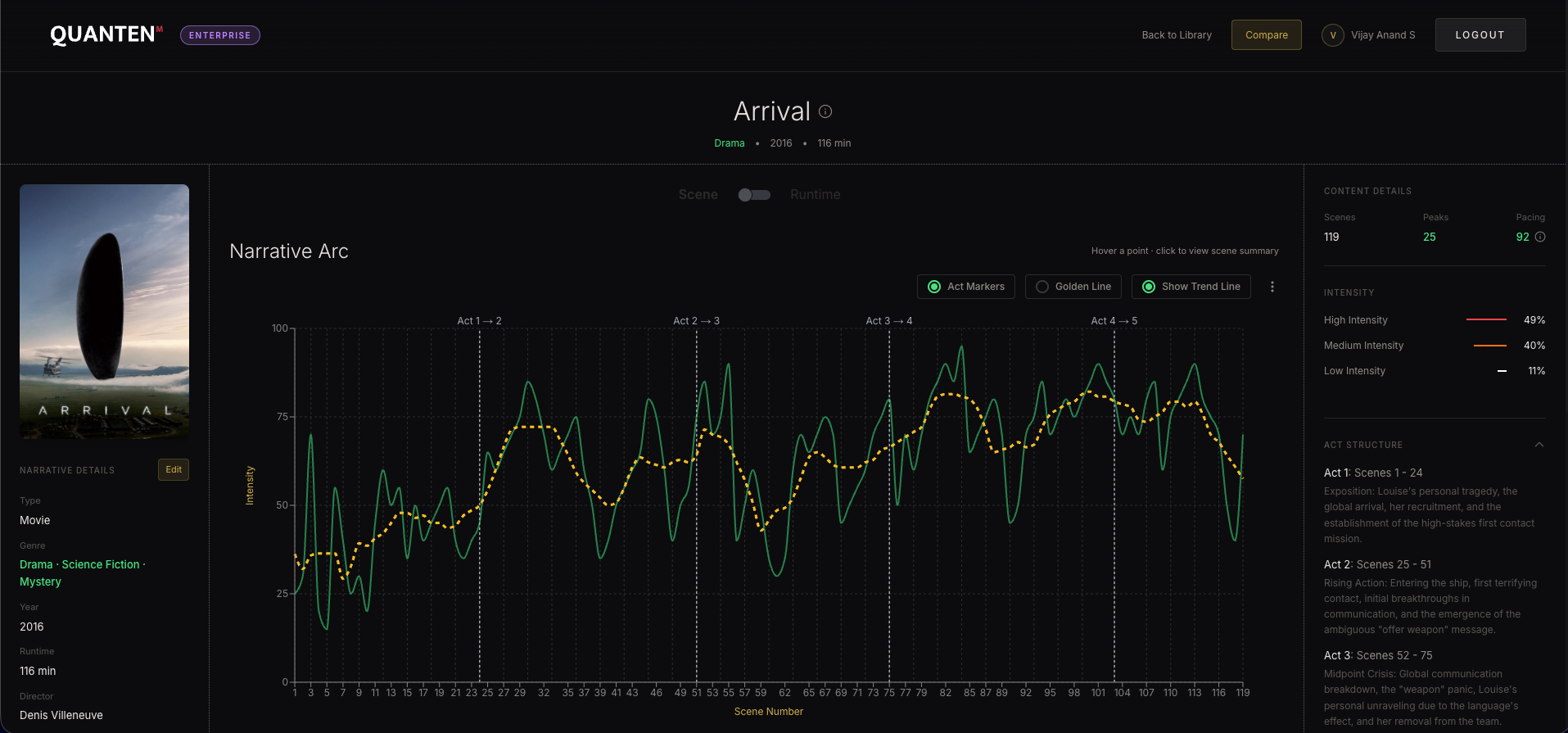
Arrival is the most intense film in this group by a significant margin. 48.7% high intensity. A momentum score of 15.9, nearly double any other film here. An Act 4 that runs at an average intensity of 74.6. Arrival does not breathe. It builds relentlessly from the midpoint onward and never releases the pressure.
Project Hail Mary breathes throughout. 55.6% of its scenes sit in the medium intensity band. Its momentum score is 8.7. It has sustained patience across Acts 3 and 4 that Arrival never allows.
The executives who said Arrival were describing what Project Hail Mary is about. They were not describing how it is built. Those are different conversations, and confusing them is one of the most common ways development comps mislead rather than illuminate.
Interstellar: right all along, but probably for the wrong reasons
Interstellar was cited repeatedly as a reference point. The space epic scale, the father-daughter emotional core, the scientific ambition. Those were the reasons it kept coming up.
But the data shows the real reason Interstellar belongs in this conversation has nothing to do with any of those things.
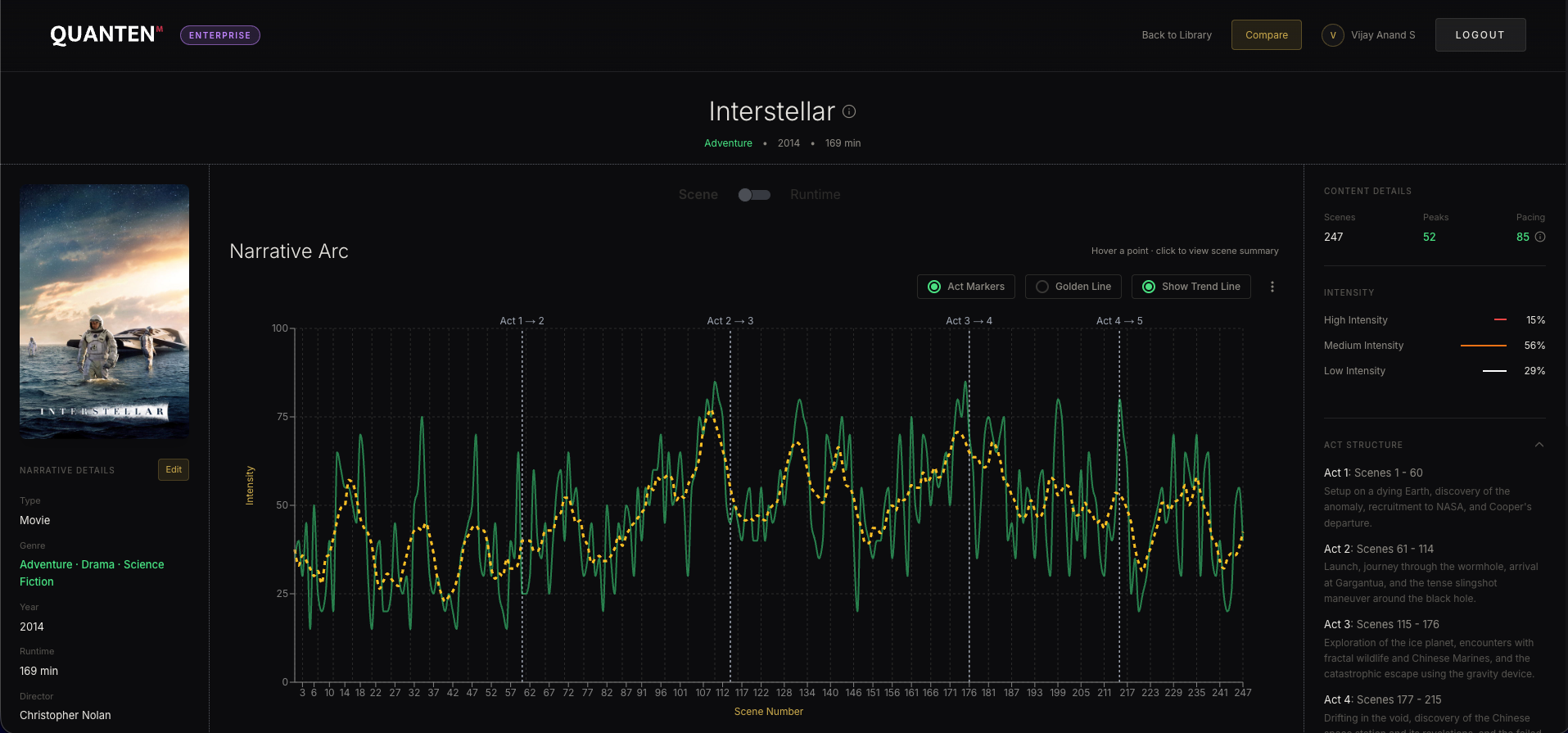
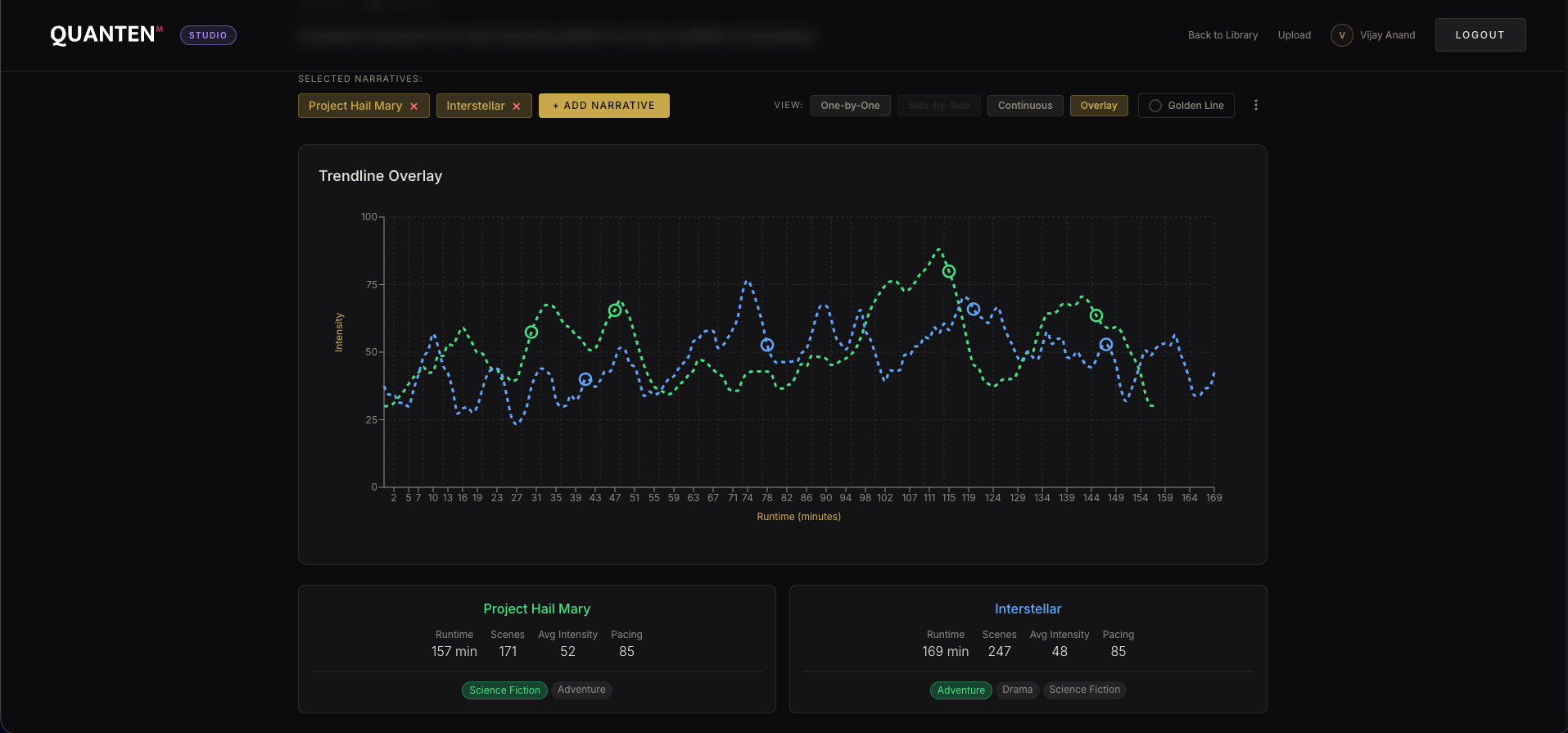
Both films run long. Both sit predominantly in the medium intensity band. Interstellar at 55.9% medium, Project Hail Mary at 55.6%. Both have quiet, patient Act 1s that take their time establishing the world before the story begins. Interstellar's Act 1 runs 60 scenes at an average intensity of 36.7. Project Hail Mary's Act 1 runs 33 scenes at 43.6. Both films build momentum gradually across their runtime rather than spiking early and sustaining it.
Interstellar has the lowest high intensity percentage of any film in this group at 15%. Project Hail Mary is second lowest at 21.6%. These are both films that live in the space between action and reflection, where the emotional weight comes from sustained investment rather than dramatic escalation.
The executives who kept saying Interstellar were right. They just could not have told you why. They were thinking about spectacle and scale. The data says the real connection is structural patience. They landed on the correct answer through instinct. The data shows what that instinct was actually responding to.
What a useful comp actually does
A comp should answer a structural question: how does this film behave, and what does that tell us about the audience experience it is designed to create?
The comps thrown at Project Hail Mary were answering a different question entirely. They were answering: what other successful films does this remind us of? That is a marketing question, not a development question. It describes what the film looks like from the outside. It says nothing about what the film is doing on the inside.
The structural data gives you the development question. It tells you whether your film breathes like Interstellar or pressurises like Arrival. Whether it moves like The Martian or immerses like Project Hail Mary. Those are different audience experiences, different marketing conversations, and different expectations to manage on opening weekend.
When Arrival was cited as a comp, it set an expectation of sustained, escalating pressure. Project Hail Mary does not deliver that. It delivers something more patient and more quietly emotional. That gap between the comp expectation and the actual audience experience is where word of mouth either ignites or stalls.
When The Martian was cited as a comp, it set an expectation of crowd pleasing momentum. Project Hail Mary does not deliver that either. It delivers something that asks more of its audience and rewards them differently. Audiences who showed up expecting The Martian in space may have left feeling something they could not quite name. That is not a failure of the film. It is a failure of the comp conversation.
The lesson for development
Comps serve two conversations. The first is the greenlight conversation, where the comp is shorthand for commercial viability. The second is the development conversation, where the comp should be shorthand for structural intent.
The problem is that most comp conversations happen in the first register and get applied to the second. A studio says Interstellar and means we believe this can open like Interstellar. A development executive hears Interstellar and starts shaping notes toward what they remember about Interstellar. Those are two completely different instructions and they frequently pull a script in opposite directions.
What the data shows is that Interstellar was the right structural comp for Project Hail Mary. Structurally patient. Medium register dominant. Quietly emotional rather than dramatically escalating. If that structural understanding had been the anchor of the development conversation rather than the marketing one, the notes that came in would have been different. The instinct to protect the quiet ending, the long Act 3, the measured pacing, would have had a structural argument behind it rather than just a filmmaker's conviction.
That is what a structural comp is for. Not to describe what a film looks like. To describe what a film is.
A note on the data
The Project Hail Mary analysis in this post is based on a 2022 draft script found online, which predates production by approximately four years. The Martian, Arrival and Interstellar analyses are based on their released films. As noted in our previous post, the structural DNA of the 2022 Project Hail Mary script appears largely intact in the final released film, but direct comparison should be made with that caveat in mind.
Quanten Arc is a narrative intelligence platform for film and television development. arc.quanten.co/studio